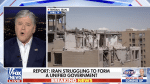
A former U.S. Treasury sanctions expert says American pressure on Iran has reached one of its most powerful moments in decades, with multiple levers hitting Tehran all at once.

Miad Maleki, who helped design sanctions targeting Iran and its proxy networks, says the current alignment of economic, political, and military pressure is unlike anything seen since the Iranian Revolution.
“We’ve never had the level of leverage that we have today with Iran in the history of our conflict … since 1979,” Maleki said in an on-camera interview.
That warning comes as President Donald Trump signaled an escalation, declaring on Truth Social that the United States has “total control” over the Strait of Hormuz and that it is effectively “sealed up tight” until Iran comes to the table.
Maleki argues the difference now is coordination.
Sanctions, naval pressure, and enforcement are being applied simultaneously, directly targeting Iran’s oil exports and the shadow networks that keep them flowing.
That combination, he says, could trigger a rapid economic squeeze.
Iran could run out of oil storage in as little as two to three weeks, forcing production cuts. Gasoline shortages could follow on a similar timeline due to the country’s reliance on imports.
The numbers are stark.
Maleki estimates Iran is losing roughly $435 million per day under current conditions, with pressure spilling into the broader financial system. That raises the risk the regime may struggle to pay salaries—an inflection point that has historically fueled unrest.
At the core is an economy already under strain.
Maleki describes Iran as “on the verge of collapse,” pointing to triple-digit food inflation, a sharply weakened currency, and a roughly 90% drop in purchasing power. Long-term oil revenue losses could reach as high as $14 billion annually.
Watch the clip above.